

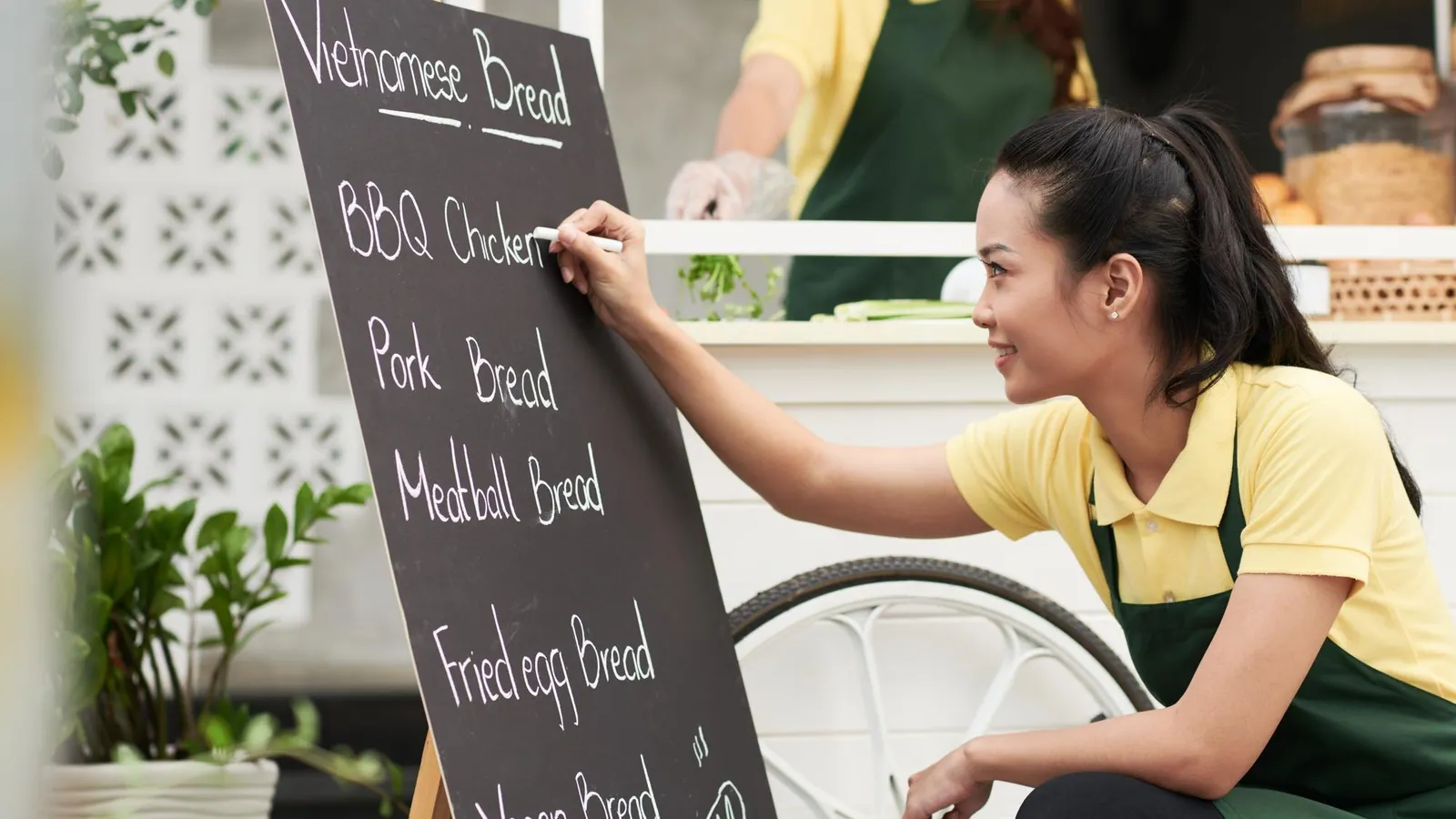
To design a restaurant menu, start with your item list and group it into clear sections. Then build a layout that guides the eye, format prices so they don't dominate, and pick a print size that suits how guests actually hold and read it. Good menu design is mostly about clarity: a guest should find what they want in under a minute.
We design menus at our Miami studio and print them on our own press, so this guide focuses on the decisions that matter most. If you'd rather hand it off, see our menu design service.
What are the parts of a menu?
There is no single official list, but most restaurant menus follow the same flow. Here are the sections you will usually see:
- Appetizers or starters
- Soups and salads
- Entrees or main dishes
- Sides
- Desserts
- Beverages (non-alcoholic, and alcohol if you serve it)
- Specials or seasonal items
You don't need all seven. A taqueria, a salon café and a steakhouse will each use a different mix. Kids' items, shareables or brunch sections can be added where they fit your concept.
The point of sections is to match how people decide. Guests usually choose a category first, then an item inside it.
How many factors should you consider when designing a menu?
There is no magic number. In practice, we work through the same short checklist on every project:
- Audience and concept: who is reading, and what should the place feel like?
- Reading conditions: dim dining rooms, outdoor patios and counter service all change type size and contrast.
- Item count: fewer items are easier to read and easier for the kitchen to execute.
- Hierarchy: section headers, item names, descriptions and prices each need a clear level.
- Brand consistency: fonts, colors and logo should match your signage, website and packaging.
- Print format: size, folds, paper and how often the menu will change.
- Durability: whether the menu gets wiped down, handled constantly or replaced often.
If you cover those seven, you have covered what most menu problems come from.
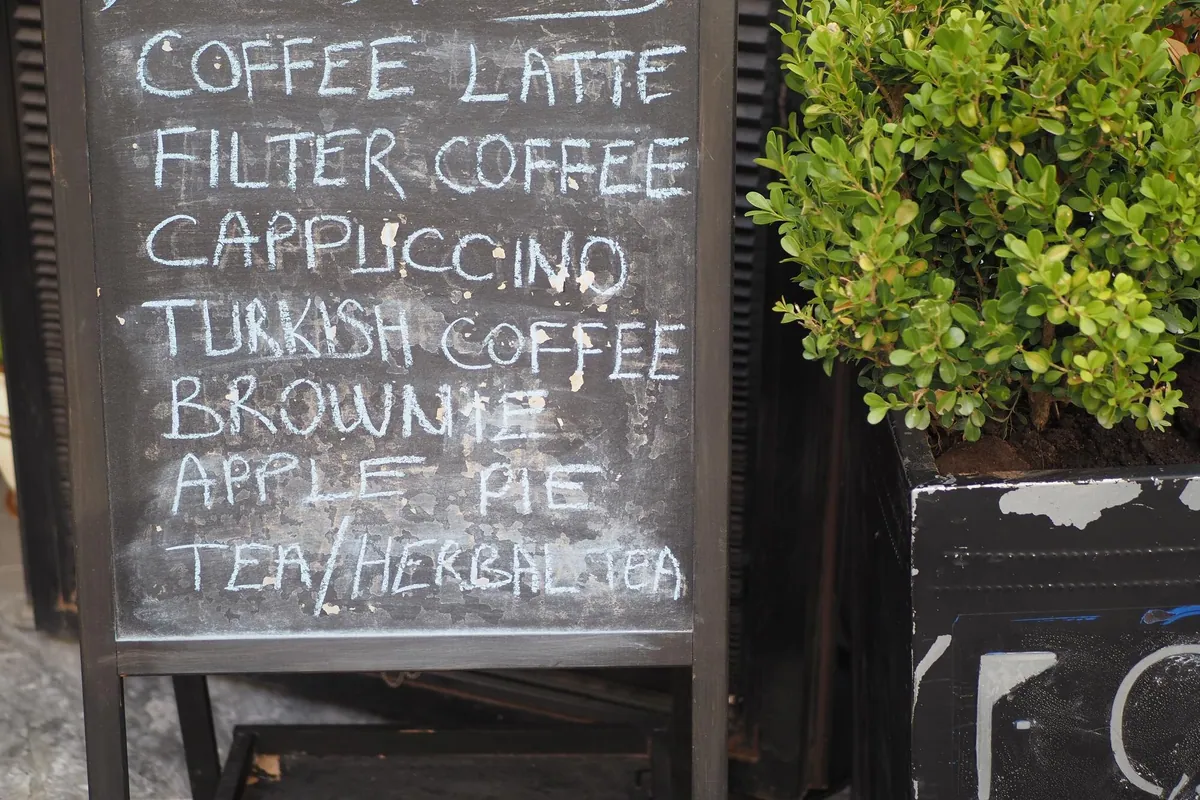
How should you order and group menu items?
Group by how guests eat, not by how the kitchen is organized. Starters, mains and desserts in that order is the most familiar pattern, and familiarity helps people move fast.
Keep sections short. Long unbroken lists are hard to scan, and guests tend to skim rather than read every line. As general guidance, aim for a handful of items per section and split a section if it keeps growing.
A few layout habits that help:
- Put the items you most want to sell where the eye naturally lands, such as the top of a section or the start of a column. Use spacing or a subtle highlight, not loud boxes around everything.
- Keep descriptions short. Name the main ingredients and the cooking method, and stop there.
- Leave white space. A crowded menu feels cheap, and a menu with room to breathe feels considered.
- Limit yourself to two or three typefaces: one for headers, one for body text, and optionally an accent.
If you use photos, use them sparingly and make sure they are good ones. A few strong images do more than a page of small, dark ones.
How do you format prices on a menu?
Make prices easy to find but not the loudest thing on the page. The goal is for guests to choose a dish because it sounds good, then check the price, not scan a column of numbers first.
Some practical formatting rules:
- Skip the dollar signs if it suits your style. A plain number reads cleaner. Keep whichever format you pick the same across the whole menu.
- Don't line prices up in a rigid column with dotted leaders if you want guests to focus on dishes. Placing the price right after the description, in the same size and weight, is quieter.
- Stay consistent with decimals. Pick whole numbers or two decimals and stick with it.
- Use the same type weight for every price. Bolding a few draws attention to them, which may not be what you intend.
- Check every price twice before printing. A wrong price on a printed menu is expensive to fix.
These are design conventions, not rules. Your own pricing strategy is a business decision, and we're happy to design around it.
What size should a printed menu be?
Choose the size based on how many items you have and how the menu will be used. Here are common formats to consider:
| Format | Typical use | Good to know |
|---|---|---|
| 8.5 x 11 in | Casual dining, takeout, counter service | Easy to handle and widely available |
| 8.5 x 14 in | Longer menus, diners, family restaurants | Room for more items without tiny type |
| 11 x 17 in | Large menus, folded menus, table placemats | Can be folded to a smaller handheld size |
| 4 x 9 in or similar narrow formats | Drink lists, dessert cards, table tents | Works for short, focused lists |
For exact print options and pricing, we use our online configurator rather than quote numbers here. Confirm your final dimensions and paper before you finalize the layout, since changing size late can mean redoing the whole design.
Also think about type size. As a rule of thumb, body text that is comfortable to read in low light is larger than most people expect, so test your draft in the actual room.
What is the 30/30/30/10 rule for restaurants?
That phrase usually refers to a financial rule of thumb about how restaurant revenue is split between costs and profit. It is not a menu design rule, and versions of it vary from source to source. If you want to use it for pricing, check the exact breakdown with your accountant or a trusted industry source first.
What it does tell us is that menu design and menu pricing are connected. A beautiful layout cannot fix a menu where the numbers don't work, so settle your items and prices before you commit to a final design.
What do we do differently?
A free online menu maker can give you a quick layout, and for a one-off flyer that may be enough. A restaurant menu is different, because it is handled all day, read in poor light and expected to match the rest of your brand.
Here is what we bring:
- Human designers. Every menu is designed by a person who talks to you about your concept. We never use AI for design.
- Printed on our own press in Miami. We can check proofs, paper and color ourselves, because the design and print teams work in the same place.
- 100% copyright ownership. The finished design is yours.
- A 72-hour turnaround.
- A real person to talk to. We are open 7 days a week.
We have served about 25,000 customers. Across Google, Trustpilot and Facebook we have 3,662 reviews in total, including 1,745 on Google with a 5.0 rating.
If your menu should look like it belongs to the same brand as your signs and website, it helps to start with a solid identity. Our logo design work covers that, and our web design and development team can make sure your online menu matches the printed one.
A quick checklist before you print
- Read every line aloud for typos and wrong prices.
- Print one test copy at full size and read it in your dining room's lighting.
- Ask someone who has never seen your menu to find a specific dish and time how long it takes.
- Confirm that fonts, colors and your logo match your other materials.
- Check the paper and finish for spills and handling.
If you want a menu designed and printed in one place, start with our menu design page.

|
2 weeks ago
|