

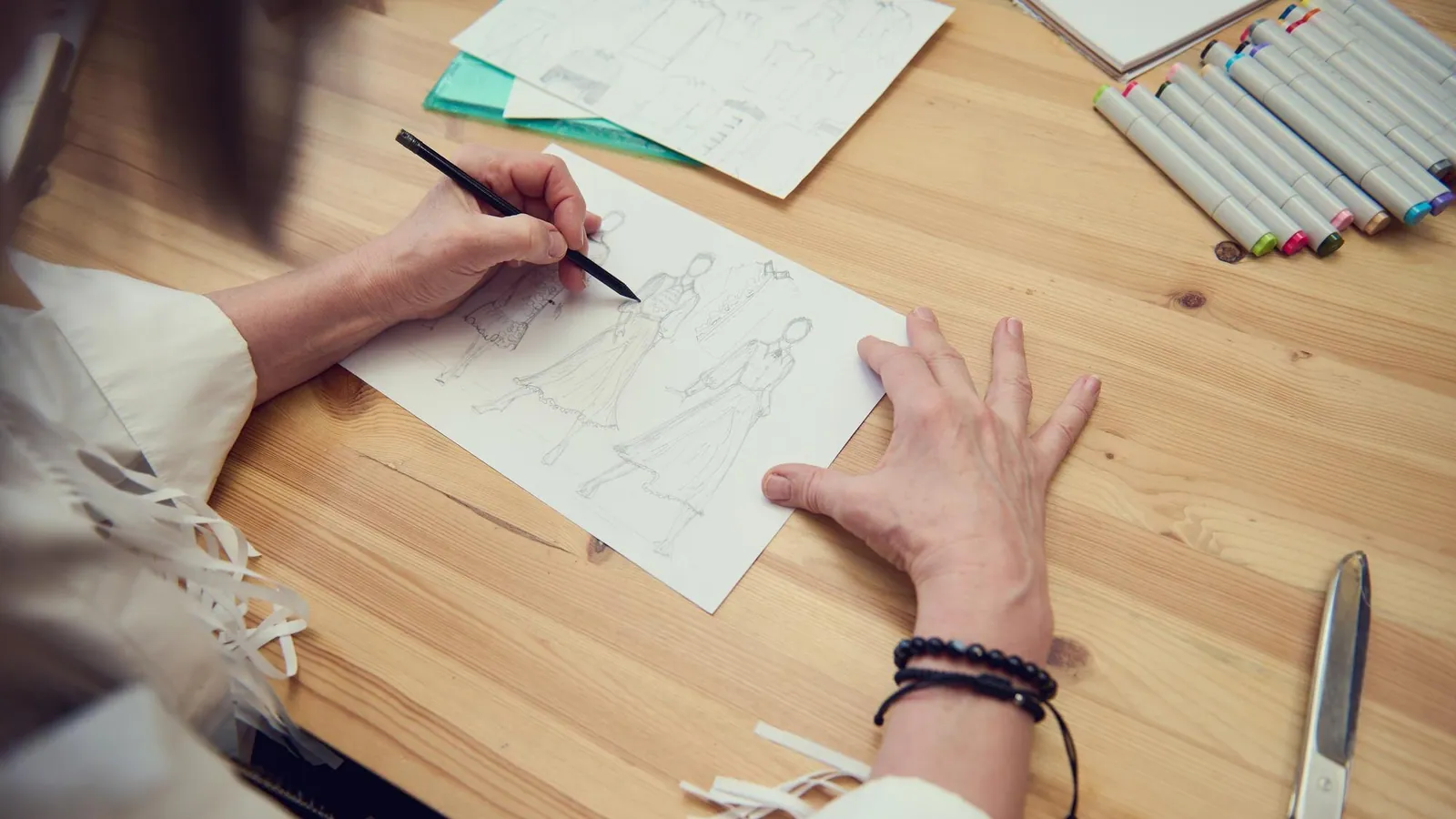
Quick answer: An apparel designer turns your clothing idea into artwork and files a manufacturer or printer can actually produce. For a small brand, that usually means concept sketches, graphics and logo placement, mockups, color and size specs, and print-ready files. The goal is a garment that looks the way you pictured it, and gets made the same way every time.
What does an apparel designer actually do?
The title covers a wide range of work, so it helps to separate the parts. Some apparel designers focus on the look: graphics, type, color and placement. Others focus on the technical side: fit, fabric, construction and sizing.
For a small brand, the work that moves you forward fastest is usually the visual side. That includes:
- Developing a concept so your pieces feel like one brand, not a pile of random shirts
- Creating the graphics, lettering and logo artwork that go on the garment
- Deciding where artwork sits on the garment and how large it prints
- Choosing colors that work on the fabric you picked
- Preparing files so a printer can run them without guessing
If you are still building the brand itself, this overlaps with logo design. A clear logo and a few brand colors make every later apparel decision easier.
What does the process look like from idea to print-ready files?
The exact steps vary by project, but most good apparel design work follows this order.
- Brief. You explain who the clothing is for, what you want to make (tees, hoodies, hats, uniforms) and how many you expect to order.
- Concept and sketches. The designer explores directions. You pick one or ask for changes.
- Artwork. The chosen direction becomes clean, production-ready art, usually vector for logos and line work.
- Mockups. You see the design on a garment shape, with the real placement and colors, before anything is printed.
- Revisions. You adjust size, position or color while changes are still cheap.
- Final files and specs. You receive the files and a list of the details a printer needs: dimensions, colors, placement and garment notes.
- Production. The pieces are printed or sent to a manufacturer.
The mockup step matters more than people expect. A graphic that looks great on a screen can feel too big on a small chest print or get lost on a dark fabric. Catching that on a mockup costs far less than catching it on a finished order.
What is a tech pack, and do you need one?
A tech pack is a document that tells a factory exactly how to make a garment. It typically covers measurements, fabric, stitching, trims, labels, colors and artwork placement.
Whether you need one depends on what you are making:
- Printed blanks (decorating existing tees, hoodies or hats): you usually do not need a full tech pack. You need clear artwork, placement and size notes, and color information.
- Cut and sew (your own pattern, fabric and construction): you do need a full tech pack, and you will likely work with a technical designer or pattern maker as well.
Our focus is the graphic design side of apparel: artwork, mockups and print-ready files. If your plan involves custom patterns and construction, plan for a separate technical specialist for that part. You can see how the graphic side works on our clothing and apparel design page.
Which print method fits your design?
A good designer thinks about the print method early, because it changes how the art should be built. Here is a general guide. Details such as minimum quantities and pricing vary by printer, so confirm them for your project.
| Method | Works well for | Things to know |
|---|---|---|
| Screen printing | Bold designs with a limited number of colors, larger runs | Each color usually adds setup work |
| Direct to garment (DTG) | Detailed, multi-color artwork, small runs | Results depend on fabric and garment color |
| Heat transfer | Small batches, names and numbers, quick custom jobs | Feel and durability vary by material |
| Embroidery | Logos on polos, caps, jackets and uniforms | Fine detail and tiny text do not stitch well |
| Sublimation | All-over designs on suitable polyester fabrics | Generally not suited to dark or cotton garments |
The takeaway: a design built for embroidery looks different from one built for DTG. Tell your designer the method up front, or ask them to recommend one based on your artwork and budget.
Are you looking for apparel designer jobs, or for a designer to hire?
People searching this topic often land on job listings, including location-based ones such as apparel designer openings near a particular port or city. Those are two different needs, so here is how they split.
If you want an apparel design career: job boards are where employer listings live, and they vary by city and season. We do not run a job board and will not guess at openings or pay in any location. Typical paths include graphic design, fashion design or technical design training, plus a portfolio of real garments.
If you are a brand owner hiring a designer: location matters much less than people think. Artwork, mockups and print files are delivered digitally, so you can work with a studio anywhere. What matters is the portfolio, the process, who owns the finished files, and how easily you can reach a person.
A few questions to ask any designer or studio before you commit:
- Who owns the final artwork?
- Are the designs made by a person, or generated by software?
- Will I get files a printer can use, not just a picture?
- Can I talk to someone when I have a question?
How we work at The Business Toolkit
We are a design and marketing studio in Miami with our own print press, and we have served about 25,000 customers. Having design and print under one roof means our designers build files with production in mind.
Here is what you can count on:
- Human designers, never AI. Your artwork is created by a person, not generated.
- 100% copyright ownership. The finished design is yours.
- Our own print press in Miami. Your brand's printed materials can come from the same team that designed them.
- Real people. You can talk to a real person, and we are open 7 days a week.
- Public reviews. We have 1,745 Google reviews rated 5.0, 1,176 Trustpilot reviews, and 3,662 reviews in total across Google, Trustpilot and Facebook.
For print pricing, we use an online configurator, so you can see the numbers for your own order.
How do you brief an apparel designer so the first draft is close?
A clear brief saves rounds of revisions. Bring these items:
- Who wears it: age range, lifestyle, and where they will wear it
- Garment types and quantities: even a rough estimate helps choose a print method
- Brand assets: your logo, colors and fonts, if you have them
- References: three to five garments you like, and one you do not, with a note on why
- Placement ideas: chest, back, sleeve, tag or all over
- Budget and timing: so the designer can recommend a realistic method
The same habits that reduce revisions on a logo apply here. Our guide on how to brief a logo designer covers them, and working with a graphic designer: 7 valuable tips is a good read before your first call.
Next step
If you have a clothing idea and want to see how the design side works, start on our clothing and apparel design page.

|
1 week ago
|
